

AI Design Sprint®: Process Automation
Training & certification
Our training and certification program gives you the skills to guide any team — from identifying AI opportunities, to developing specific AI solution concepts ready for technical development.
Bootcamp dates
24.-27. Aug, 9-13.00 (CET)
15.-18. Sep, 14-18.00 (CET)
Join the Bootcamp
Choose a date and secure your spot.
15.-18. Sep
14-18.00 (CET)
€1.800

24.-27. Aug
9-13.00 (CET)
€1.800

Can't make either date? Let us know you're interested and we'll notify you as soon as new dates are announced.
Company Team Training
The Company Team Training is designed for you and your colleagues — up to 8 people from the same organisation, scheduled at a time convenient for you.
Training is available onsite or remotely, delivered by two trainers. Remote training runs across 4 half-days of 4 hours each. Onsite training is delivered over 2 full days.
Every participant receives the AI Design Sprint®: Process Automation Facilitator certificate upon completion and all material needed to lead a session.

Bootcamp
Our Bootcamps bring together individuals from different organisations to learn and apply the AI Design Sprint® Process Automation methodology, guided by 2 trainers. Ideal for anyone looking to automate or streamline their workflows.
The content is identical to the Company Team Training — the difference is that you join as an individual rather than as a team. Bootcamps are delivered remotely and live.
Upon completion, every participant receives the AI Design Sprint®: Process Automation Facilitator certificate and all material needed to lead a session.
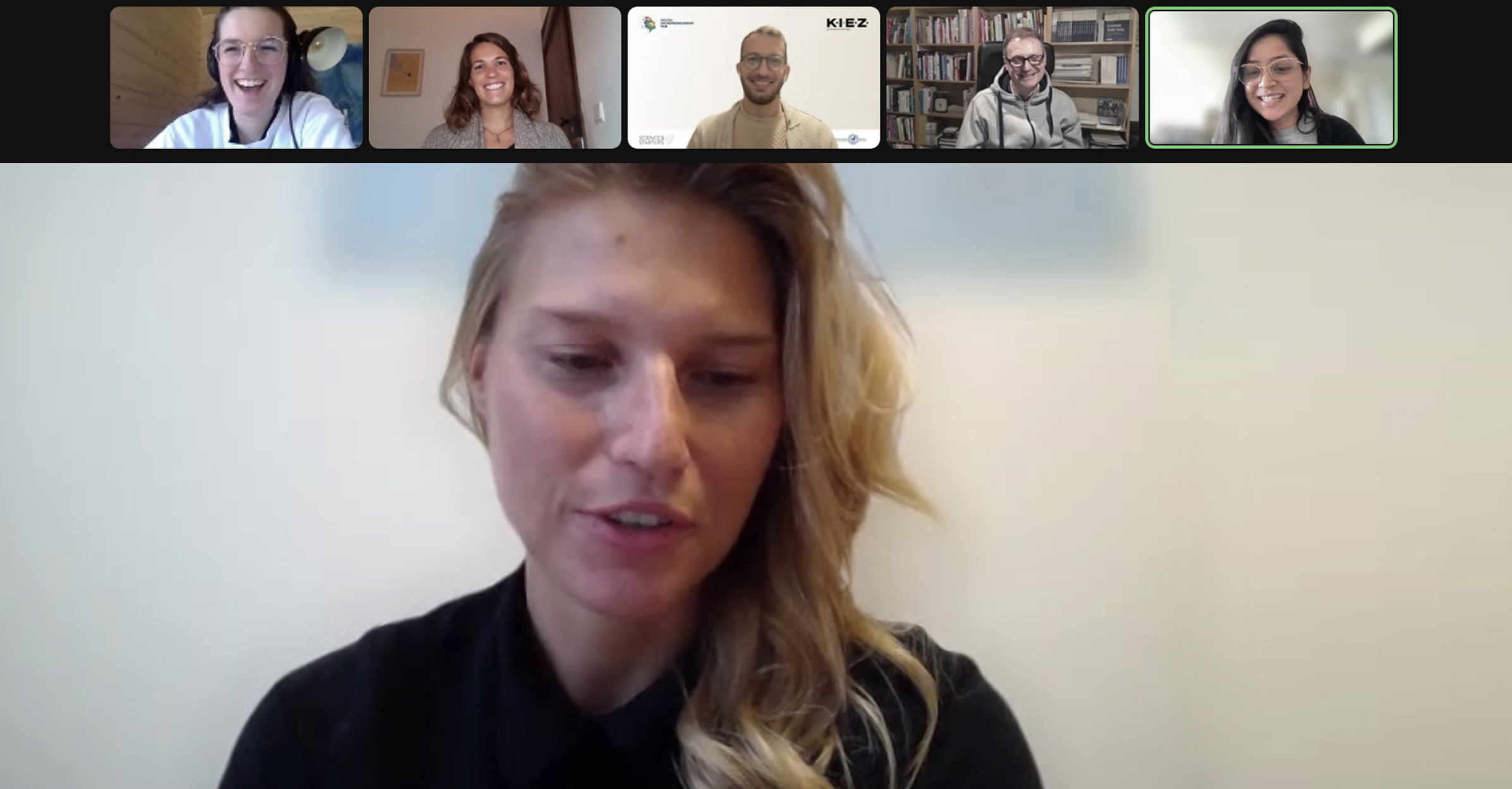
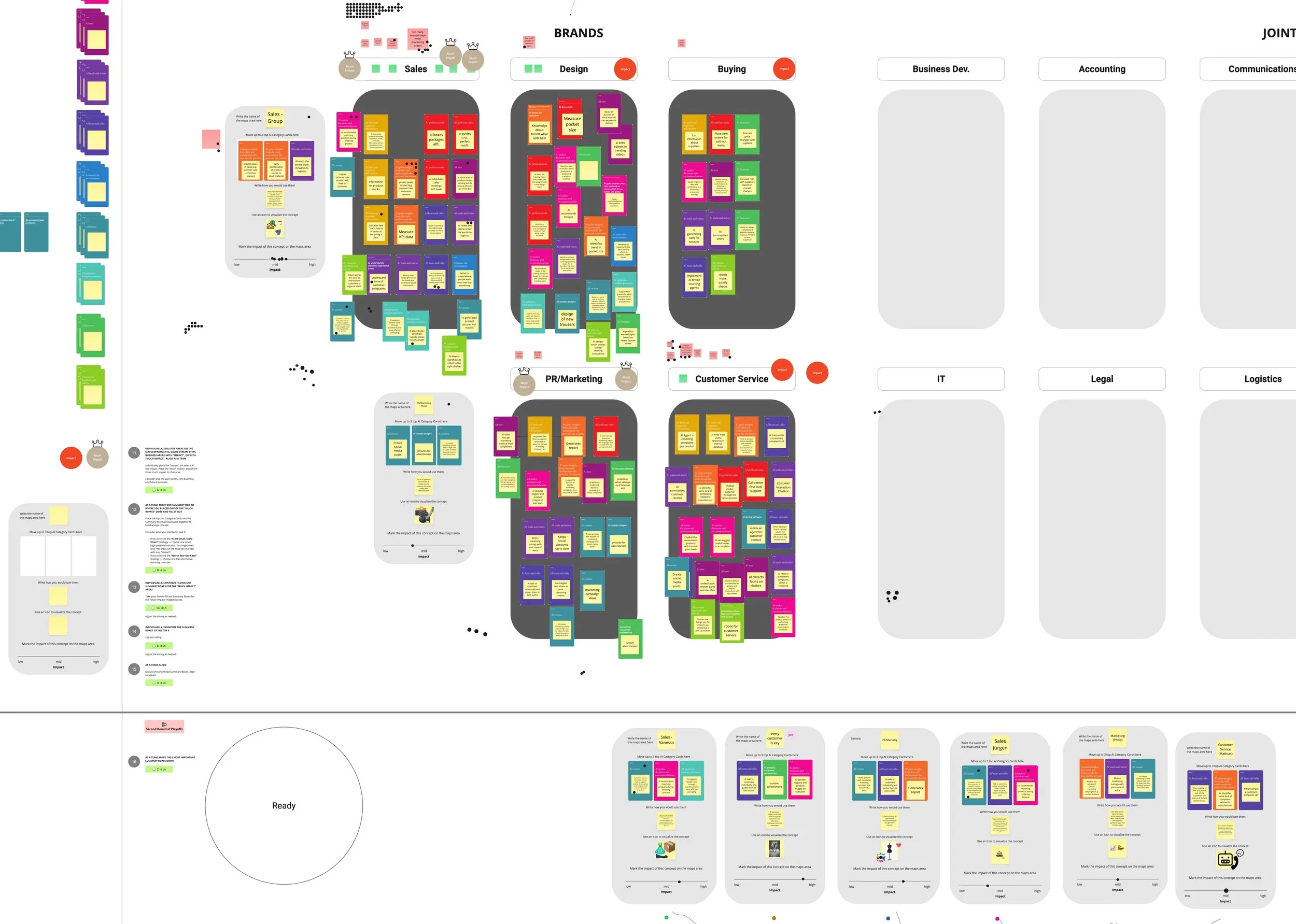
How it works
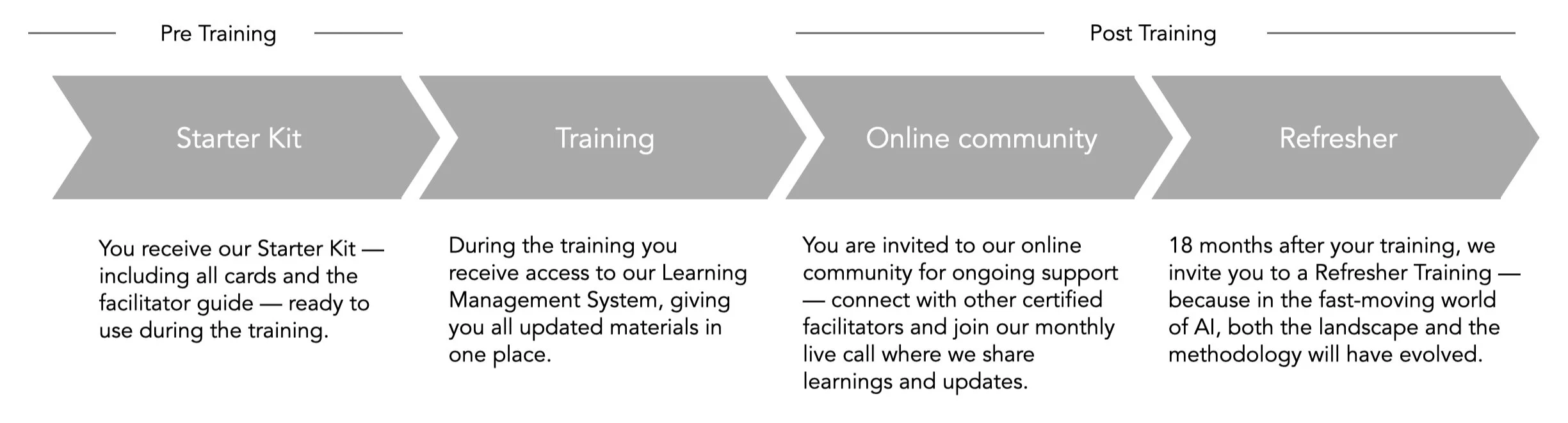
Training Structure
The training is divided into two halves. In the first half, you experience the full AI Design Sprint®: Process Automation — Opportunity Mapping and Concept Development & Assessment — from the participant's perspective. In the second half, you switch into the facilitator role. Facilitating parts of the Concept Development session yourself serves as a natural recap while putting you in the role you'll take on with your own clients or teams. You'll also work with the preparation templates and learn how to hand over to the technical team.
Training Agenda
Half-day 1 — Opportunity Mapping Participants work through an example case, identifying focus areas for AI application within a business area and department using the Opportunity Mapping format.
Half-day 2 — Concept Development & Assessment Taking the focus area identified in half-day 1, participants develop a detailed AI solution concept and assess it using the Concept Development & Assessment format.
Half-day 3 — Facilitation Practice Participants facilitate the Concept Development format themselves — recapping the methodology and stepping into the facilitator role as early as possible.
Half-day 4 — Preparation & Outlook Introduction to the preparation template and technical brief template. Outlook to Tech Check and Prototype, with time to address technical questions.
Trainer

Michael Brandt
CEO, Co-founder

Kerstin Bognar
Facilitation
Or two other trainers from 33A.
Presenting ‘Tech Check’ and ‘Prototype’

Joanna Stoffregen
AI Product Development

Erik Stoffregen
AI Product Development
Join the Company Team Training
Get in touch and we'll propose a date and format that works for your team.
Join the Bootcamp
Choose a date and secure your spot.
15.-18. Sep
14-18.00 (CET)
€1.800
24.-27. Aug
9-13.00 (CET)
€1.800
Can't make either date? Let us know you're interested and we'll notify you as soon as new dates are announced.
What to expect
This is not a sit-and-listen training. You work hands-on with the methodology from the start, and step into the facilitator role as quickly as possible — guiding parts of the session just as you would with a real client or in-house team. By the end, you've already practised leading it.


What others are saying
“It was a truly brilliant training for our team! I was already very impressed with your approach beforehand, and I am even more so after participating in the training. The AI Design Sprint® offers an excellent opportunity to bring business colleagues and technical experts together to speak the same language when it comes to AI. It transforms challenges into specific, detailed solutions, and prioritizes impact over innovation for its own sake. This approach is perfect for us for driving AI adoption throughout our large organization.”
Ivo Strohhammer, Enterprise Architect, SI IT Innovation Lead, Siemens
“The AI Design Sprint® is such a relevant and genius tool to bridge business and AI thinking.”
Cecilie Bonde Christiansen, Principal Transformation Manager, Amsterdam Data Collective